
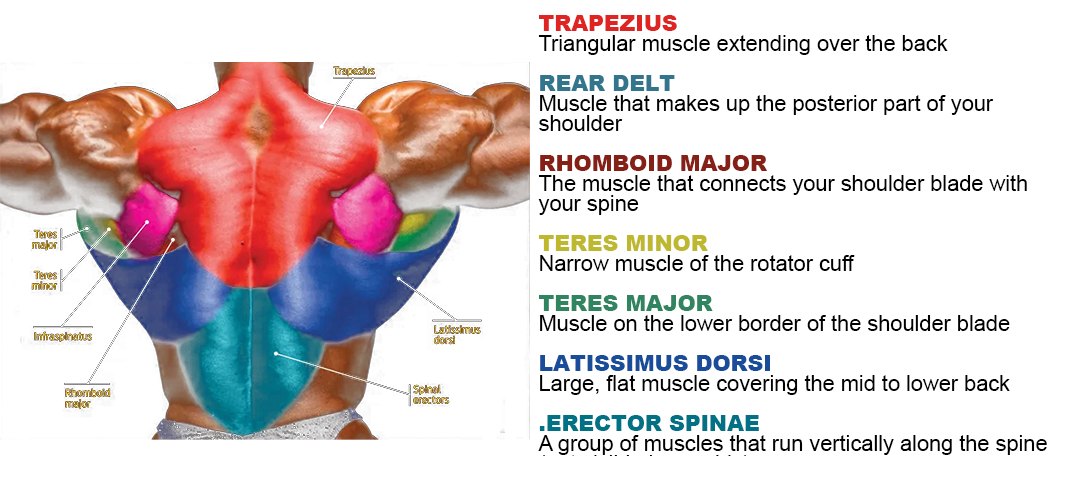
Back anatomy
The back is not one muscle but a layered team. The lats give width, the traps and rhomboids give thickness between the shoulder blades, and the small teres and rear-deltoid muscles steer the shoulder. Pulling angle decides who does the work.
Jump to: Latissimus dorsi · Trapezius · Rhomboid major · Teres major · Teres minor · Posterior deltoid
Latissimus dorsi
The big 'wing' running from the lower spine and pelvis to the upper arm. It pulls the arm down and back — pulldowns, pull-ups and rows with the elbows tucked.
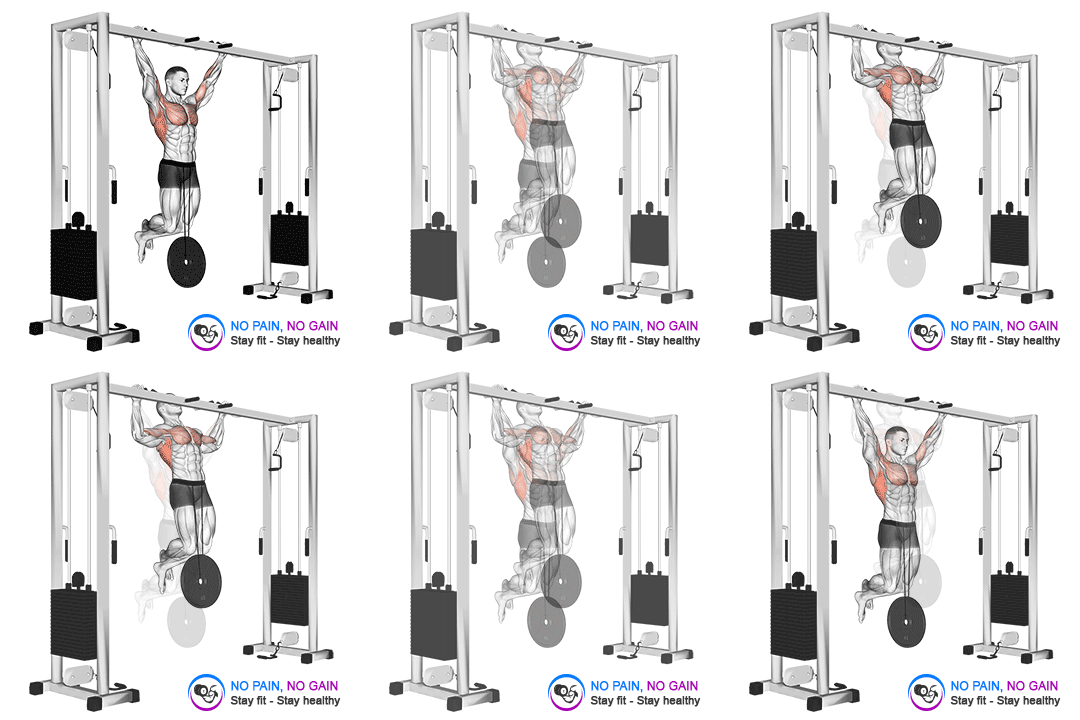
Weighted pull-ups primarily target the following muscles in the upper body: Latissimus Dorsi (Lats): The lats are the large muscles of the back and are heavily engaged during pull-up exercises.
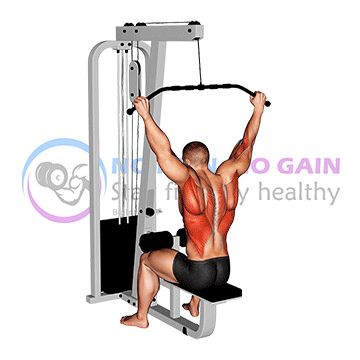
The Cable Pulldown Pro Lat Bar exercise primarily targets the Latissimus Dorsi muscles, which are commonly referred to as the .
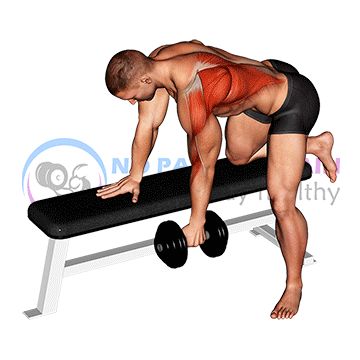
The Dumbbell Bent Over Row is a compound exercise that primarily targets the latissimus dorsi, rhomboids, middle and lower trapezius, and posterior deltoids, strengthening the back and improving posture.
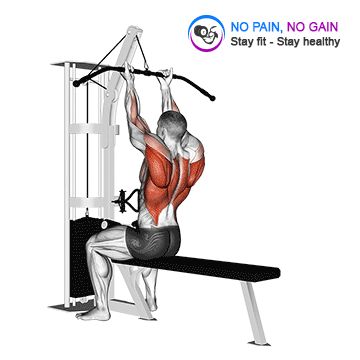
The cable reverse grip straight back seated high row primarily targets the following back muscles: Trapezius: The trapezius is a large muscle that runs down the upper and middle part of your back.
Trapezius
The kite-shaped muscle from the skull to mid-back. Upper fibres shrug, middle fibres pull the shoulder blades together, lower fibres pull them down.
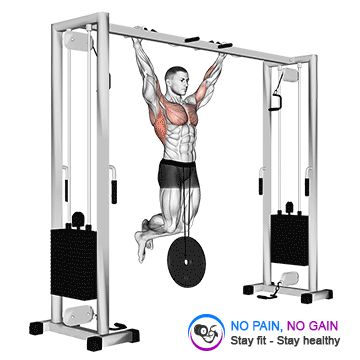
Weighted pull-ups primarily target the following muscles in the upper body: Latissimus Dorsi (Lats): The lats are the large muscles of the back and are heavily engaged during pull-up exercises.
The Dumbbell Bent Over Row is a compound exercise that primarily targets the latissimus dorsi, rhomboids, middle and lower trapezius, and posterior deltoids, strengthening the back and improving posture.
The cable reverse grip straight back seated high row primarily targets the following back muscles: Trapezius: The trapezius is a large muscle that runs down the upper and middle part of your back.
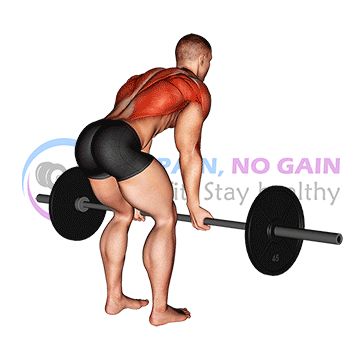
The Barbell Reverse Grip Bent Over Row primarily targets the following muscle groups in your back and shoulders: Trapezius: The upper and middle fibers of the trapezius muscle are engaged when you perform this exercise, especially when you squeeze your shoulder blades together at the top of the movement. Rear Deltoids (Posterior Deltoids): The rear deltoids, which are the muscles at the back of your shoulders, are worked during the rowing motion. Rhomboid Major and Rhomboid Minor: The rhomboid muscles, both major and minor, are responsible for retracting the scapulae (bringing your shoulder blades closer together).
Rhomboid major
Sits under the traps between the shoulder blades and squeezes them toward the spine — rows and reverse flyes finished with a full squeeze.
Weighted pull-ups primarily target the following muscles in the upper body: Latissimus Dorsi (Lats): The lats are the large muscles of the back and are heavily engaged during pull-up exercises.
The Dumbbell Bent Over Row is a compound exercise that primarily targets the latissimus dorsi, rhomboids, middle and lower trapezius, and posterior deltoids, strengthening the back and improving posture.
The cable reverse grip straight back seated high row primarily targets the following back muscles: Trapezius: The trapezius is a large muscle that runs down the upper and middle part of your back.
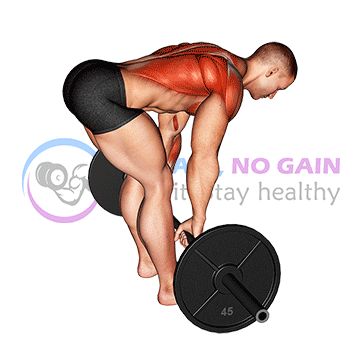
The Barbell Bent Over Row primarily targets several muscles in the back.
Teres major
A small muscle beside the lat that assists pulling the arm in and back; it works hard in wide-grip pulldowns and straight-arm pulldowns.
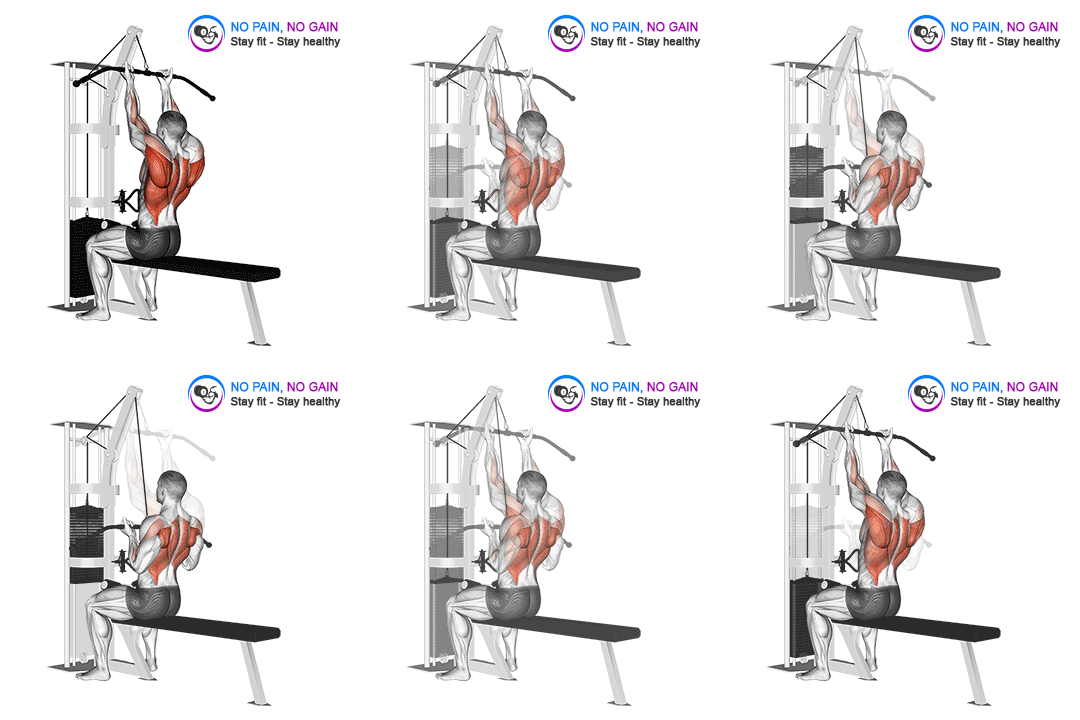
The cable reverse grip straight back seated high row primarily targets the following back muscles: Trapezius: The trapezius is a large muscle that runs down the upper and middle part of your back.
The Barbell Bent Over Row primarily targets several muscles in the back.
The Barbell Reverse Grip Bent Over Row primarily targets the following muscle groups in your back and shoulders: Trapezius: The upper and middle fibers of the trapezius muscle are engaged when you perform this exercise, especially when you squeeze your shoulder blades together at the top of the movement. Rear Deltoids (Posterior Deltoids): The rear deltoids, which are the muscles at the back of your shoulders, are worked during the rowing motion. Rhomboid Major and Rhomboid Minor: The rhomboid muscles, both major and minor, are responsible for retracting the scapulae (bringing your shoulder blades closer together).
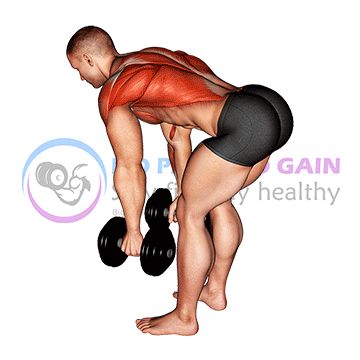
The dumbbell bent-over row primarily targets several muscles in the upper body and back.
Teres minor
One of the rotator-cuff four; it rotates the arm outward and stabilises the shoulder joint during every pull.
The cable reverse grip straight back seated high row primarily targets the following back muscles: Trapezius: The trapezius is a large muscle that runs down the upper and middle part of your back.
The Barbell Bent Over Row primarily targets several muscles in the back.
The Barbell Reverse Grip Bent Over Row primarily targets the following muscle groups in your back and shoulders: Trapezius: The upper and middle fibers of the trapezius muscle are engaged when you perform this exercise, especially when you squeeze your shoulder blades together at the top of the movement. Rear Deltoids (Posterior Deltoids): The rear deltoids, which are the muscles at the back of your shoulders, are worked during the rowing motion. Rhomboid Major and Rhomboid Minor: The rhomboid muscles, both major and minor, are responsible for retracting the scapulae (bringing your shoulder blades closer together).
The dumbbell bent-over row primarily targets several muscles in the upper body and back.
Posterior deltoid
The back third of the shoulder. Face pulls, reverse flyes and wide rows with the elbows high train it directly.
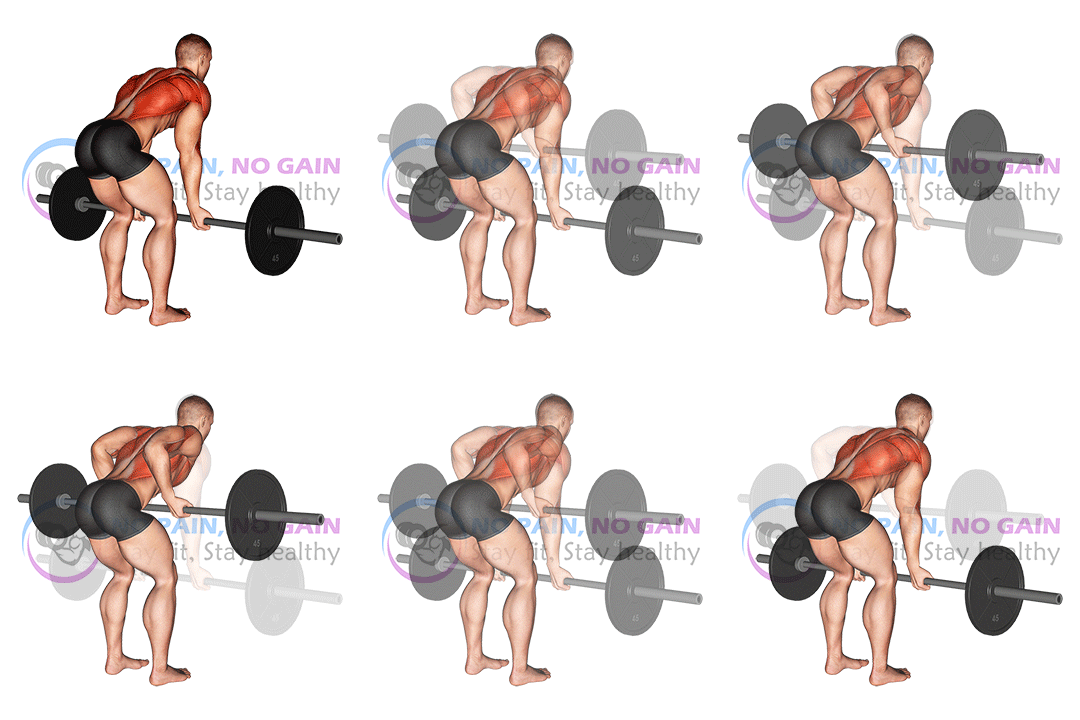
The Barbell Reverse Grip Bent Over Row primarily targets the following muscle groups in your back and shoulders: Trapezius: The upper and middle fibers of the trapezius muscle are engaged when you perform this exercise, especially when you squeeze your shoulder blades together at the top of the movement. Rear Deltoids (Posterior Deltoids): The rear deltoids, which are the muscles at the back of your shoulders, are worked during the rowing motion. Rhomboid Major and Rhomboid Minor: The rhomboid muscles, both major and minor, are responsible for retracting the scapulae (bringing your shoulder blades closer together).
The dumbbell bent-over row primarily targets several muscles in the upper body and back.
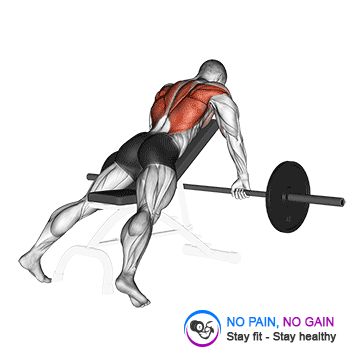
The Barbell Incline Row primarily targets the following muscles from the listed group: Trapezius: The upper part of the trapezius muscle is engaged during this exercise.
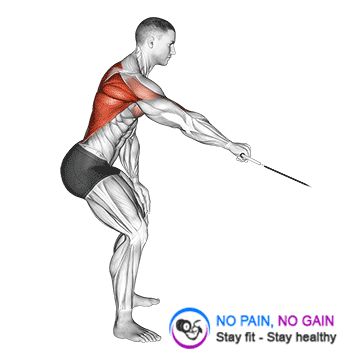
The Cable Palm Rotational Row Back exercise primarily targets the following muscles: Trapezius: The trapezius muscles, particularly the middle and lower portions, are heavily engaged during this exercise.
Back — common questions
Tap any muscle on the interactive atlas to see exactly where it is, what it does and every movement that trains it — plus AI food scanning and a diet plan sized to your numbers.

More muscle guides: Chest · Shoulders · Biceps · Triceps · Free tools: BMI · Calories & macros
Educational content — not medical advice. Exercise demonstrations and region data come from our apps' exercise library.
← Anatomy